Why Kids Play Rugby and Why They Keep Coming Back
Some kids try rugby because a friend invited them. Some show up because a parent played. Others arrive with no idea what a ruck is, only that the ball looks strange and everyone seems to be laughing.
Then something clicks.

They make their first tag, pass, tackle, run, or try. They learn a teammate’s name. A coach gives them a nod. They leave muddy, tired, and already asking when practice is again.
That is the part worth talking about. Kids play rugby for many reasons, but they keep coming back because the game gives them something deeper than a weekly activity. It gives them belonging, challenge, confidence, and a community that often feels bigger than the field.
Rugby feels active from the first practice
One reason rugby grabs kids is simple: they get moving right away.
There is not much standing around when a good youth practice is running. Kids chase, pass, dodge, defend, restart, and try again. Even younger players who begin with flag or touch rugby can feel the rhythm of the sport quickly.
The ball moves. The players move. The energy stays high.
That matters because many kids do not fall in love with a sport through long explanations. They fall in love through doing. Rugby gives them physical problems to solve in real time.
How do I find space?
When should I pass?
Where should I support my teammate?
Can I get back on defense?
Those questions keep the game fresh. A child can be brand new and still contribute. They can run hard, cheer loudly, make a simple pass, or help a teammate up. There is room to learn without needing to be perfect on day one.
Rugby also welcomes different kinds of athletes. Fast runners have a place. Strong defenders have a place. Careful listeners, brave tacklers, smart passers, and steady teammates all have a place. Kids notice that.
In many sports, children start to feel boxed in early. Too small. Too slow. Too new. Rugby can push back against that feeling because the game needs many body types, instincts, and personalities.
Kids stay because they feel like they belong
The rugby community has a habit of pulling people in.
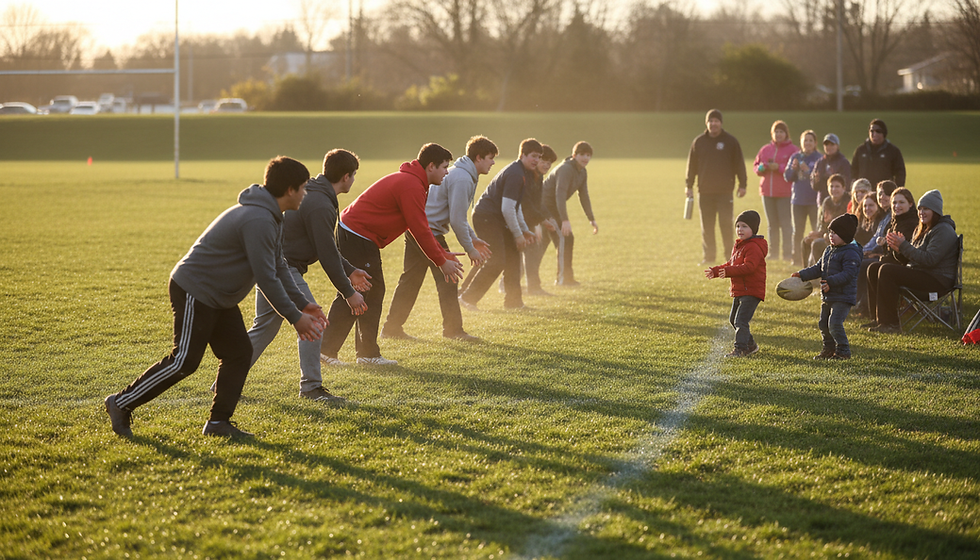
At the youth level, that often starts with small moments. Older players help younger ones learn a drill. Coaches remember names. Parents set up chairs along the sideline and become part of the weekly routine. Families share snacks after matches. Teams cheer each other, even after a tough game.
That culture does not happen by accident. Rugby has long carried the idea that opponents are respected, referees are respected, and teammates look after each other. When children experience that early, it shapes how they see the sport.
A kid may start because they enjoy running with the ball. They keep coming back because they feel seen.
Belonging is powerful. It can turn a nervous first practice into a season. It can turn a season into years. It can turn teammates into friends who stay connected long after the final whis
For many families, rugby becomes more than a sport on the calendar. It becomes a weekend anchor. The same faces show up. The same jokes get repeated. The same kids grow taller together year after year.
That is one reason the community keeps growing. New families do not just see a game. They see connection.
The game teaches confidence without making it a lecture
Rugby has a way of teaching life lessons without turning them into speeches.
A player drops the ball, then picks it up and gets back in line. A child misses a tackle, then tries again. Someone makes a great run because three teammates did the quiet work to create space.
The lessons are built into the game:
Resilience Mistakes happen often, and play continues.
Trust No player can do everything alone.
Communication Players learn to call for the ball, organize defense, and encourage each other.
Respect The referee’s decision stands, and players move on.
Courage Kids learn to try hard things in a supported environment.
Those lessons matter because children can feel them. They are not abstract. A player knows what it feels like to be nervous before contact. They know what it feels like to get up after a fall. They know what it feels like when a teammate says, “Good job,” after a hard effort.
This is also where good coaching makes all the difference. Youth rugby should be age-appropriate, well taught, and centered on player development. When coaches build skills step by step, kids gain confidence at a healthy pace.
The goal is not to rush children into the toughest version of the sport. The goal is to help them enjoy the game, learn safely, and grow into better teammates.
Families see growth on and off the field
Parents often notice changes before kids do.
A child who was quiet starts calling for the ball. A player who hated losing learns to shake hands. Someone who struggled to focus begins listening because the drill matters to them. A kid who once stayed near the edge of the group walks into practice with confidence.
That kind of growth is easy to support.
Rugby gives families something real to celebrate that is not only about scoring. The best moments are often smaller:
A first clean pass under pressure
A brave defensive effort
A player helping another child after a knock
A full practice finished with effort
A handshake after a physical match
These moments are why youth sports matter when they are done well. Winning is fun, but development lasts longer.
Rugby also gives families a sport they can learn together. For parents who did not grow up with it, that can be part of the fun. The rules become clearer over time. The positions start to make sense. The spirit of the game becomes easier to spot.
Before long, the whole sideline is learning.
The community keeps growing because the experience is real
People come back to places where they feel welcome.
That is true for kids, and it is true for families. Rugby grows when clubs create a space where new players are not treated like outsiders. It grows when experienced families explain the basics. It grows when coaches care about every child, not only the strongest players. It grows when the sideline feels supportive instead of tense.
The sport also has something many families are looking for: a balance of toughness and kindness.
Rugby asks kids to be brave, but it also asks them to be respectful. It lets them compete hard, then shake hands. It gives them contact and challenge, but also structure, teamwork, and accountability.
That mix is rare. It is a big part of why kids play, stay, and bring friends.
The most interesting question may not be why kids try rugby. Kids will try almost anything if it looks fun.
The better question is why they return.
They return because the game gives them movement, friendship, challenge, pride, and a place to belong. They return because someone taught them well. They return because the team needs them. They return because rugby has a way of making a child feel both strong and supported.
Every family has its own version of that story. Maybe it started with a first try, a great coach, a new friend, or one muddy Saturday that turned into a season.
That shared experience is the heart of the sport. It is also why the community keeps getting bigger.


Comments