Start Where It Works Building Grassroots Rugby from High School Up

A lot of people assume a youth rugby club has to begin with the youngest players. Start with flag, build into middle school, then someday create high school teams.
That path can work. For some communities, it is the right path.
But it is not the only path.
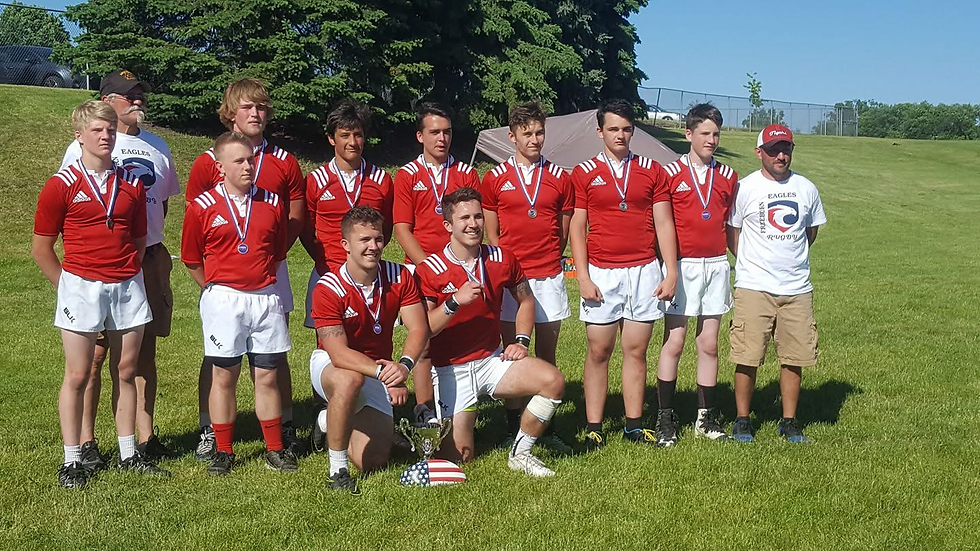
For our Eagles club, the starting point was much more practical. Our sons were still playing high school rugby, we had moved, and they needed a place to play. So we started there. Boys high school rugby became the foundation, not because it looked perfect on paper, but because it matched the need right in front of us.
That one choice shaped everything that came after.
The best starting point is often the one with real support
When you are trying to grow a club, it is easy to get stuck planning the “right” order.
Should the first team be flag? Should it be middle school? Should you wait until there are enough coaches for every age group? Should you build boys and girls teams at the same time?
Those are fair questions. But the better first question is simpler.
Where is the energy already happening?
For us, the energy was at the high school level. We had players who wanted to play. We had parents who were willing to help. We had a clear reason to organize. That was enough to begin.
Starting at high school gave the club something every new program needs: visibility. People saw the Eagles competing, practicing, volunteering, and representing the sport well. Over time, the club became known in the community. Families recognized the name. Younger players saw older athletes wearing the jersey. Parents began to trust the program.
That kind of reputation is hard to build from a flyer alone. It comes from showing up season after season.
A strong high school program can open doors you did not expect
Once the boys high school team was established, something new started to happen. We began hearing interest in a girls high school team.
At first, it was just conversation. A few questions here and there. A few names. A little curiosity. So we decided to hold a parent meeting and see what happened.
The room was packed.
That moment mattered. It showed that the interest was not just wishful thinking. Families were ready. Players were ready. The community had been watching long enough to believe that a girls team could work.
From there, the program grew in a way that made sense for our club. Years later, my daughter was old enough to play. She did what athletes often do better than adults can. She recruited. She talked to friends. She helped spread the word among alumni girls and younger players who were waiting for their turn.
That is one of the hidden strengths of starting with high school. Older players have networks. They know siblings, classmates, neighbors, and former teammates from other sports. They can make rugby feel less unfamiliar.

Older players can help build the younger levels
After the high school teams took root, the next steps became more possible. Years later, we added a middle school team. We also began running community education camps.
Those programs needed adult leadership, of course. But they also needed something else: high school players who were willing to help.
Our older athletes became assistant coaches, demonstrators, mentors, and role models. Some even became certified coaches. That changed what we were able to offer.
A middle school player can hear the same instruction from an adult ten times. Then a high school player says it once, demonstrates it, and suddenly it clicks. Younger athletes look up to the older players. They see what is possible. They picture themselves staying in the sport.
That connection matters in grassroots rugby because retention is just as important as recruitment. It is one thing to get a child to try rugby for a week. It is another thing to help them feel like they belong in the club for years.
High school players can help create that feeling.
They bring energy to camps. They make drills fun. They remember what it was like to be new. They can tell a nervous middle school player, “I started there too.”
That carries weight.
Adding flag rugby became the next natural step
Now, as we look ahead to year 10 of the club, we are adding flag rugby.
On paper, that might sound backwards. A lot of clubs begin with flag and build up from there. We are doing it after building high school, girls high school, middle school, and community camps.
But for us, it makes sense.
We are not starting flag from nothing. We are starting it with a community behind it. We have high school players who can help teach. We have families who know the club. We have alumni who can spread the word. We have a name that younger kids have already heard.
That is the power of building from the place where support already exists.
Flag rugby will give younger kids a safe and fun way to start learning the game. It will help families enter the club earlier. It will also give our high school players another chance to lead.
That full-circle moment is important. The team that started the club is now helping grow the next generation.
There is no single correct order for building a club
It still makes sense to start with the youngest players in many communities. If there is already strong interest from elementary families, if there are coaches ready for flag, or if a local rec program wants to partner, that might be the best choice.
But another community might need to begin with middle school. Another might have a group of high school athletes begging for a team. Another might start with girls rugby because that is where the strongest support is.
The order matters less than the commitment.
A good starting point usually has a few things in common:
Players who are ready
Interest is easier to build when a core group already wants to play.
Parents or adults who will help
A club needs people who can organize, communicate, coach, drive, and show up.
A visible place in the community
Schools, parks, rec programs, and local events can all help people notice the club.
A path for players to stay involved
Younger teams, older teams, alumni, and coaching roles all keep the connection going.
A willingness to grow one step at a time
Every level does not need to exist on day one.
The biggest mistake is waiting until the plan feels perfect. Clubs are built by people who start with what they have and keep going.
Start where you can and build from there
The Eagles did not follow a perfect youth development chart. We started with boys high school because that was the need. Then the community helped reveal the next step. Girls high school. Middle school. Camps. Now flag rugby.
Each layer came from the one before it.
That does not mean every club should copy the same order. It means every club should pay attention to its own people.
Where is the most interest?
Where do you have the most support?
Who is ready to help right now?
Start there.
There is no right or wrong way to begin building a rugby club. There is only the choice to begin, stay committed, and let the community grow with you.


Comments